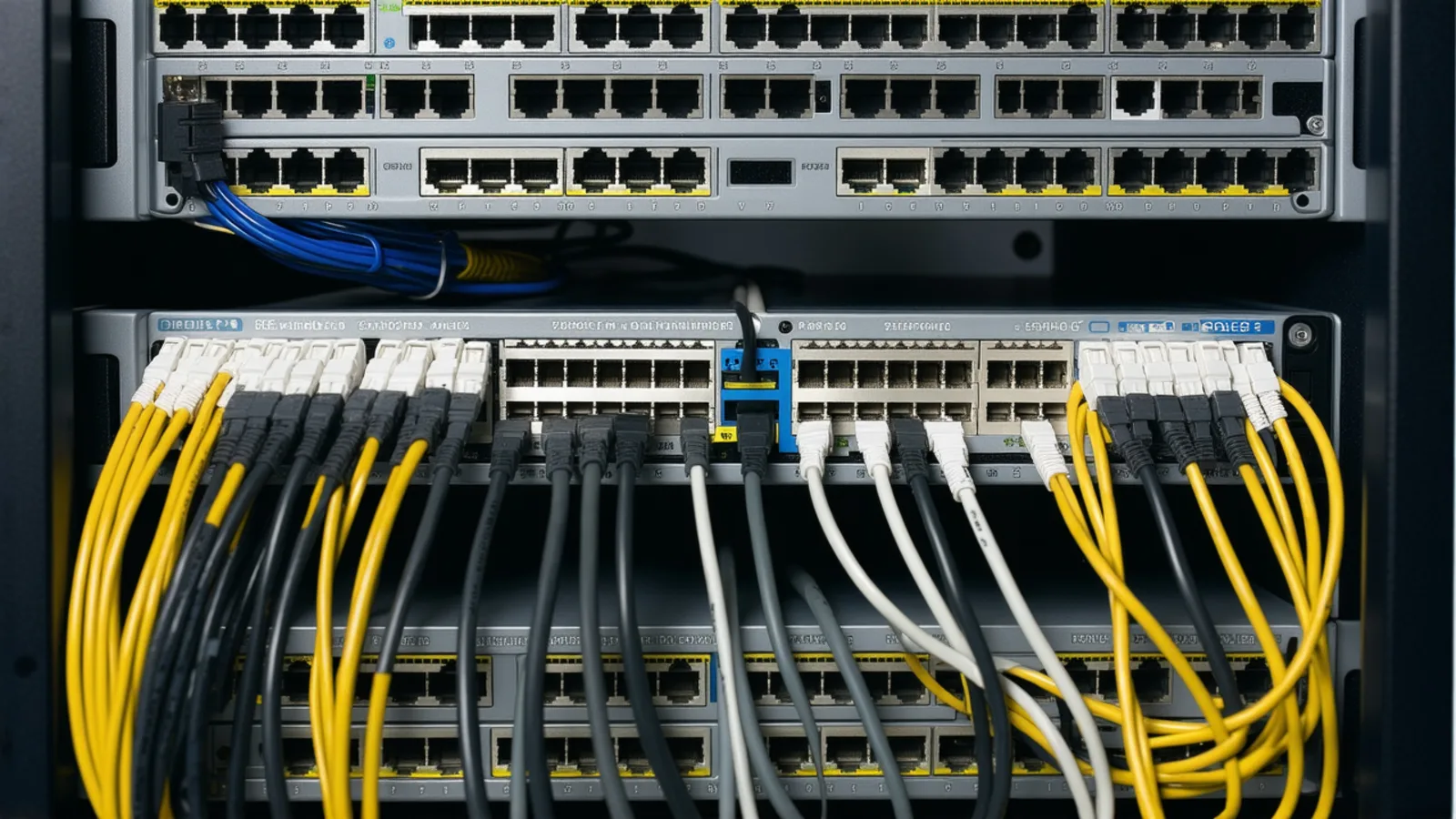
The cheapest LLM API in 2026 is not one provider. It is a moving target across more than a dozen vendors that reprice monthly. The lowest list price DeAI can verify today: DeepSeek V4 Flash at $0.14 per million input tokens and $0.28 per million output tokens (as of 2026-08-20). This is how the 14 providers stack up.
Key takeaways
- DeepSeek V4 Flash lists at $0.14/M input and $0.28/M output tokens (as of 2026-08-20), the lowest verified price anchor in this 14-provider roundup.
- Every provider here prices per million tokens, but your effective cost swings with input/output mix, prompt caching, context tiers, and batch discounts.
- Open-weight inference specialists (Groq, Together, Fireworks, DeepInfra, Cerebras, Hyperbolic, Nebius) typically price a fraction of frontier-lab flagship rates.
- One aggregator (OpenRouter) and one decentralized inference marketplace (Morpheus) let you route across providers instead of committing to a single price list.
- Switching between OpenAI-compatible providers is a one-line base-URL change, so re-shop prices quarterly, not annually.
What "cheapest" actually means in 2026
List price per million tokens is the headline number, but your invoice is always (input tokens × input price) + (output tokens × output price). Output tokens are typically priced several times higher than input, so a chatbot that generates long answers and a document pipeline that ingests long contexts have completely different cost profiles on the same API.
A worked example using the one price DeAI can verify: a workload of 1 billion input tokens and 250 million output tokens on DeepSeek V4 Flash costs (1,000 × $0.14) + (250 × $0.28) = $210 at list price. The same traffic mix on a provider with a higher input/output price ratio could cost materially more even if its list input price looks similar.
Four more levers move the real number:
- Prompt caching. Repeated system prompts and few-shot prefixes are often billed at a steep discount on cache hits. High cache-hit workloads can land far below list.
- Batch APIs. Several providers offer asynchronous batch endpoints at reduced rates for non-latency-sensitive jobs.
- Context tiers. Some vendors charge more per token once requests cross a context-length threshold.
- Quality floor. The cheapest API is the cheapest model that passes your evals. A model that is 40% cheaper but fails 10% of tasks costs more after retries and human review.
The verified anchor: DeepSeek V4 Flash price
DeepSeek built its market position on aggressive list pricing, and V4 Flash continues that pattern: $0.14 per million input tokens, $0.28 per million output tokens, list price, as of 2026-08-20. That is the lowest figure DeAI can independently verify today, which is why it anchors this roundup: not because the rest of the market is necessarily more expensive, but because list prices change weekly and DeAI only states numbers it can source.
Two caveats before you commit volume. First, list price is not effective price: caching, context tiers, and any usage-based discounts live in the fine print of DeepSeek's API docs. Second, price is only one axis. Throughput limits, regional availability, and data-handling terms matter at production scale. For a hands-on setup walkthrough, see DeAI's guide to running DeepSeek V4 Flash via API.
The 14 cheapest LLM API providers, side by side
Sorted alphabetically. With only one verified price on record, ranking the rest by cost would be guesswork. Check each provider's pricing page for current numbers.
| Provider | Category | Pricing model | Pricing source |
|---|---|---|---|
| Anthropic | Frontier model lab | Per-token tiers by model; batch API | anthropic.com |
| Cerebras | Fast open-weight inference | Per-token on open-weight models | cerebras.ai |
| DeepInfra | Open-weight host | Per-token on popular open-weight models | deepinfra.com |
| DeepSeek | Model lab (direct API) | V4 Flash: $0.14/M in, $0.28/M out (as of 2026-08-20) | api-docs.deepseek.com |
| Fireworks AI | Open-weight host | Serverless per-token; dedicated deployments | fireworks.ai |
| Frontier model lab | Gemini API per-token tiers; free dev tier | ai.google.dev | |
| Groq | Fast open-weight inference | Per-token on open-weight models | groq.com |
| Hyperbolic | Open-weight host + GPU cloud | Per-token inference; GPU rental | hyperbolic.xyz |
| Mistral AI | Model lab | Per-token tiers for its own models | docs.mistral.ai |
| Morpheus | Decentralized inference marketplace | Market-set rates from independent providers | See DeAI Price Index |
| Nebius | GPU cloud + inference | Per-token inference; GPU capacity | nebius.com |
| OpenAI | Frontier model lab | Per-token tiers by model; batch API | openai.com |
| OpenRouter | Aggregator | Passes through upstream provider pricing | openrouter.ai |
| Together AI | Open-weight host | Serverless per-token; dedicated endpoints | together.ai |
Frontier labs and model labs
Anthropic, Google, Mistral, OpenAI, and DeepSeek all sell their own models directly. The pattern in 2026: each lab's flagship model carries premium pricing, while its smallest tier competes on price. Google's Gemini API has historically included a free tier useful for evaluation before committing. Anthropic and OpenAI both operate batch APIs for discounted asynchronous work. Buying direct from a model lab removes a middleman, but locks you to that lab's lineup.
Open-weight inference specialists
Cerebras, DeepInfra, Fireworks, Groq, Hyperbolic, Nebius, and Together compete to serve open-weight models (the Llama, DeepSeek, Qwen, and Mistral families and their peers) at high throughput. Because they serve the same weights, this is the most directly price-comparable segment of the market, and rates typically land at a fraction of frontier-flagship API pricing. Several also rent GPU capacity, so if your volume is steady, compare their per-token serverless pricing against renting dedicated compute and self-serving.
Aggregators
OpenRouter fronts many upstream providers under one API and one bill, with per-model prices that vary by upstream. It is useful as a comparison surface, since you can see multiple hosts' prices for the same open-weight model in one place, and as a failover layer. Check its fee schedule so you know what the aggregation layer adds.
Decentralized marketplaces
Morpheus is a decentralized inference marketplace: independent compute providers serve open-weight models, and rates are set by market participants rather than a single vendor's price list. Evaluated on the same criteria as every other row here (current price, throughput, model coverage), marketplace rates are live claims to verify at query time, not a fixed list. DeAI's Price Index is being built to track provider list prices, including marketplace rates, in one place; until it is fully live, the pricing pages linked above are the source of truth.
How do you compare prices without getting burned?
- Normalize to your traffic mix. Pull a week of real input/output token counts and compute the bill on each candidate's price sheet.
- Model your cache hit rate. If your workload resends long prefixes, caching terms can matter more than list price.
- Check batch eligibility. Offline evaluation, summarization, and embedding jobs are often batch-able at lower effective rates.
- Verify the quality floor. Run your evals against the cheapest candidate before migrating; a cheap model that fails is an expensive model.
- Read data-usage terms. Retention and privacy commitments are policy statements, not verified facts. Evaluate them as contractual terms and weigh them alongside price.
- Re-check monthly. 2026 list prices move fast. A quarterly re-shop cadence is the minimum.
Switching providers is usually a base-URL swap
Most providers here expose an OpenAI-compatible endpoint, which makes price-shopping operationally cheap:
from openai import OpenAI

client = OpenAI(
    api_key="YOUR_PROVIDER_KEY",
    base_url="https://api.your-provider.example/v1",  # swap this line to switch
)

resp = client.chat.completions.create(
    model="provider-model-name",
    messages=[{"role": "user", "content": "Hello"}],
)
print(resp.choices[0].message.content)
curl https://api.your-provider.example/v1/chat/completions \
  -H "Authorization: Bearer YOUR_PROVIDER_KEY" \
  -H "Content-Type: application/json" \
  -d '{"model": "provider-model-name", "messages": [{"role": "user", "content": "Hello"}]}'
Keep the base URL and model name in config, not code, and a provider migration becomes a deploy-time decision rather than an engineering project.
FAQ
What is the cheapest LLM API in 2026?
The lowest list price DeAI can verify today is DeepSeek V4 Flash at $0.14/M input and $0.28/M output tokens (as of 2026-08-20). Cheapest for your workload depends on input/output mix, caching, and batch discounts. Compare current rates on provider pricing pages.
What is the cheapest AI API for production workloads?
For sustained production traffic, the cheapest AI API is usually the smallest model that passes your evals, served with prompt caching and batch discounts. Open-weight hosts and aggregators typically price well below frontier-API flagship rates; verify current numbers per provider.
How do I get the lowest cost LLM inference?
Normalize prices to your real input/output token mix, use caching and batch endpoints where offered, route simple tasks to smaller models, and re-check pricing pages monthly. Switching OpenAI-compatible providers is usually a one-line base-URL change.
What is the DeepSeek V4 Flash price?
DeepSeek lists V4 Flash at $0.14 per million input tokens and $0.28 per million output tokens (as of 2026-08-20). Confirm current rates on DeepSeek's official API docs before committing volume.
Questions
- What is the cheapest LLM API in 2026?
- The lowest list price DeAI can verify today is DeepSeek V4 Flash at $0.14/M input and $0.28/M output tokens (as of 2026-08-20). Cheapest for your workload depends on input/output mix, caching, and batch discounts — compare current rates on provider pricing pages.
- What is the cheapest AI API for production workloads?
- For sustained production traffic, the cheapest AI API is usually the smallest model that passes your evals, served with prompt caching and batch discounts. Open-weight hosts and aggregators typically price well below frontier-API flagship rates; verify current numbers per provider.
- How do I get the lowest cost LLM inference?
- Normalize prices to your real input/output token mix, use caching and batch endpoints where offered, route simple tasks to smaller models, and re-check pricing pages monthly. Switching OpenAI-compatible providers is usually a one-line base-URL change.
- What is the DeepSeek V4 Flash price?
- DeepSeek lists V4 Flash at $0.14 per million input tokens and $0.28 per million output tokens (as of 2026-08-20). Confirm current rates on DeepSeek's official API docs before committing volume.
Sources
- DeepSeek API Docs — DeepSeek
- OpenAI — OpenAI
- Anthropic — Anthropic
- Google AI for Developers — Gemini API Pricing — Google
- Mistral AI Documentation — Mistral AI
- Groq — Groq
- Together AI — Together AI
- Fireworks AI — Fireworks AI
- DeepInfra — DeepInfra
- Cerebras — Cerebras
- OpenRouter — OpenRouter
- Hyperbolic — Hyperbolic
- Nebius — Nebius
About DeAI
DeAI is an independent publication covering open-weight AI models, private inference, and decentralized infrastructure — the tools for running AI you actually control. We test providers on price, privacy, and refusal behavior and publish the numbers, not the vibes. DeAI is powered by Morpheus (mor.org), a decentralized inference marketplace, and covers it on the same terms as every other provider.
Powered by Morpheus and StrandCMS
Morpheus is a decentralized inference marketplace, covered on the same terms as every other provider — we rank it wherever the data lands. StrandCMS is the open-source, agent-first framework this site is built on.