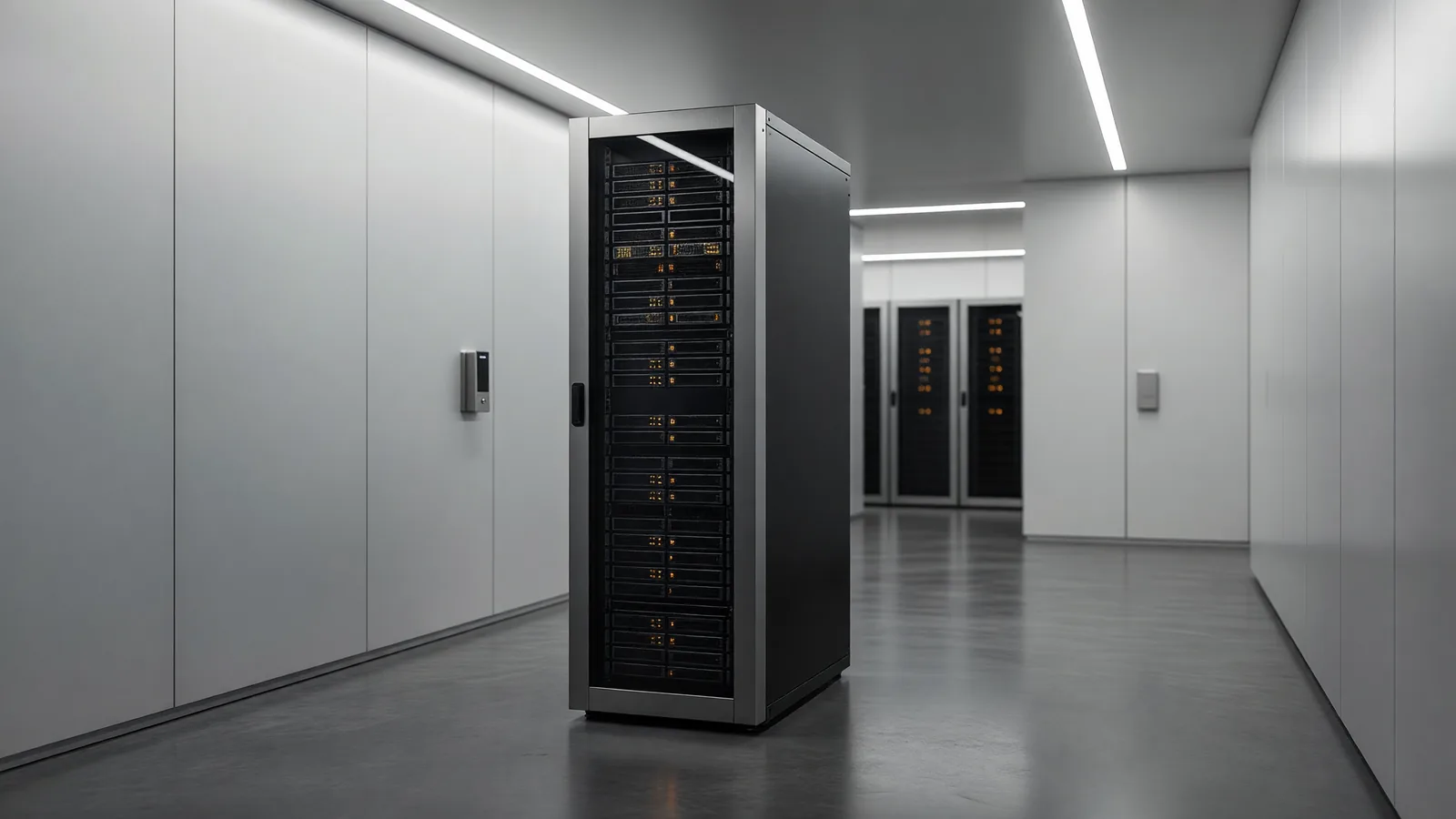
Builders on X are arguing that a large law firm just showed the rest of the enterprise world how to skip the AI API providers entirely. The verified story underneath: Latham & Watkins bought its own Nvidia GPU servers and is fine-tuning open-weight Nemotron 3 on its own legal data.
Key facts
- Latham & Watkins, the second-largest US law firm by revenue at roughly $8.3 billion last year, bought several Nvidia GPU servers and is fine-tuning open-weight models internally, per the Financial Times.
- The firm's machine-learning and software engineers are customizing Nvidia's Nemotron 3 open-weight models for the firm's own requirements, running them in a secure data-center suite accessible only to Latham personnel.
- More than 900 technology specialists work at the firm, including machine-learning engineers, AI engineers, and lawyers with coding expertise.
- On X, a single amplification post from @ayushtweetshere framing the build as the frontier labs' "worst nightmare" drew roughly 3,900 likes and 280,000 views within hours, per a point-in-time pull on September 14 — an engagement figure we have not independently verified.
What's driving the conversation
The discourse is not really about a law firm. It is about whether the largest buyers of AI still need to buy it from someone.
Anand Iyer (@ai) laid out the template plainly: open weights plus proprietary data plus local compute equals an enterprise sovereign-AI stack. The post pulled roughly 1,400 likes and 410,000 views, per the same September 14 snapshot. @bearlyai posted a detailed breakdown of the FT reporting, walking through the GPU racks, the Nemotron 3 fine-tuning, and the CIO's reasoning. And @ayushtweetshere supplied the framing that spread furthest, casting the move as a direct threat to the frontier labs' enterprise business.
That "worst nightmare" framing is commentary, not reporting. It assumes enterprises will follow Latham's lead at scale, which no source has established. What is verifiable is narrower and still interesting: a firm with $8.3 billion in revenue decided that for its most sensitive work, the right place to run a model is on hardware it owns, in a room only its staff can enter.
The substance
Strip the discourse down to what the reporting actually confirms. Latham has purchased several servers, each holding multiple GPUs, over the past few years, and is using them to run and customize open-weight models, according to the FT as corroborated by Pulse 2.0 and Law.com. The specific checkpoint being fine-tuned is Nvidia's Nemotron 3, an open-weight model the firm can download, modify, and operate on its own infrastructure rather than renting access to a closed model from OpenAI or Anthropic.
The stated motivations are client confidentiality and flexibility. Running workloads internally lets Latham process sensitive information without sending it to an external cloud. Owning the stack also gives the firm a fallback if the economics or terms of commercial AI services change. Notably, Latham is not abandoning commercial platforms; it is building an architecture where lawyers choose between internal models and third-party services per task. The firm has not disclosed how much it has spent, and any cost figure circulating on X is speculation.
Two caveats belong on the record. The engagement numbers above are Grok/X point-in-time claims, not verified counts. And the "first major law firm" label is the FT's characterization of what is publicly known, not a guarantee no peer has done the same quietly.
Why builders are watching
This is a private-inference story wearing an enterprise-IT costume. The question Latham answered — where does the model run when the data cannot leave the building — is the same one driving interest in what private inference actually means and in the self-hosting versus API cost math. The difference is that Latham is not a startup choosing a provider; it is an $8.3 billion firm choosing to become its own provider for the work that matters most.
The distinction between open-weight and open-source models does real work here: it is precisely because Nemotron 3's weights are downloadable that Latham can fine-tune them on proprietary data without that data ever touching a vendor's servers. If more enterprises land on the same architecture, the pressure lands on the API providers' enterprise tiers — on retention terms, on price, and on the question of who controls the checkpoint. That is a story worth tracking in the providers we cover, on the same terms as every other provider.
Questions
- What did Latham & Watkins actually build?
- Latham & Watkins bought several Nvidia GPU servers and its machine-learning engineers are fine-tuning Nvidia's open-weight Nemotron 3 models on the firm's proprietary legal data for internal use. The Financial Times reports it is the first major law firm publicly known to stand up this kind of in-house AI infrastructure.
- Why is Latham running models in-house instead of using an AI API?
- Per the Financial Times and Pulse 2.0, the drivers are keeping highly sensitive client data off external clouds and gaining flexibility and cost control versus buying consumption from frontier labs such as OpenAI and Anthropic. The firm still plans to use commercial AI platforms alongside its internal models.
- How big is Latham & Watkins' technology operation?
- Latham generated roughly $8.3 billion in revenue last year and employs more than 900 technology specialists, including machine-learning engineers, AI engineers, software developers, and lawyers with coding expertise, per Pulse 2.0's reporting on the FT story.
- Is the 'enterprise sovereign AI' framing confirmed?
- No. That framing is X commentary, not news. The verified facts are the GPU server purchases and Nemotron 3 fine-tuning; claims that this is a template that lets enterprises bypass frontier labs are opinion from amplifiers, not established fact.
Sources
- Latham & Watkins buys Nvidia GPU servers to set up in-house AI — Financial Times
- Latham & Watkins Buys Nvidia GPU Servers To Build In-House AI Systems — Pulse 2.0
- Latham Is Buying Its Own AI Servers: 'Flexibility is Critical' — Law.com / The American Lawyer
- Anand Iyer on the enterprise sovereign-AI stack — X
- Ayush on the Latham build as the frontier labs' worst nightmare — X
- bearlyai breakdown of the FT story — X
About DeAI
DeAI is an independent publication covering open-weight AI models, private inference, and decentralized infrastructure — the tools for running AI you actually control. We test providers on price, privacy, and refusal behavior and publish the numbers, not the vibes. DeAI is powered by Morpheus (mor.org), a decentralized inference marketplace, and covers it on the same terms as every other provider.
Powered by Morpheus and StrandCMS
Morpheus is a decentralized inference marketplace, covered on the same terms as every other provider — we rank it wherever the data lands. StrandCMS is the open-source, agent-first framework this site is built on.