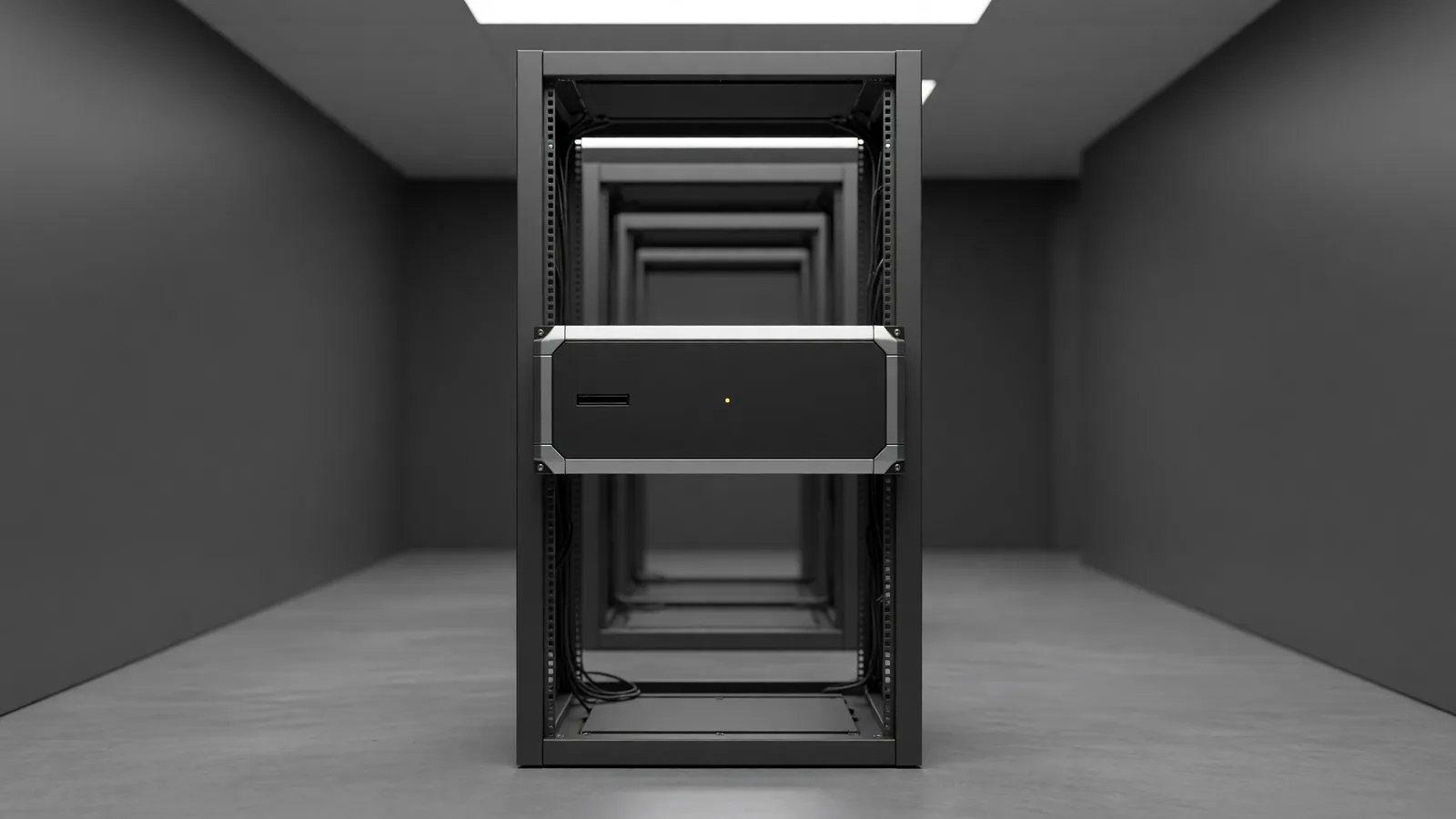
X is amplifying NEAR AI Cloud's confidential-inference expansion this morning: a TEE gateway that routes to frontier models from Anthropic, OpenAI, and Google, so the frontier provider reportedly sees only a request from NEAR AI. The verified fact underneath is that NEAR AI's TEE product is real; most of the specifics are the company's own.
Key facts
- NEAR AI's staking announcement describes the gateway architecture: frontier traffic routed to OpenAI, Anthropic, and Google through a secure gateway running inside a TEE, with an optional PII redaction function — the provider "sees a prompt arrive from NEAR AI's gateway and nothing else."
- The product documentation specifies Intel TDX plus NVIDIA confidential-GPU enclaves, TLS termination inside the TEE, and per-request hardware-signed attestation — verifiable public documentation, published before today's velocity spike.
- The claimed attestation latency is under 30 seconds per request, a provider self-report.
- Today's X thread drove the velocity, with a follow-up from @near_ai and amplifier accounts including @say_gm_, @brave, and @veniceai.
What's driving the conversation
The announcement posts from @NEARProtocol and @near_ai frame the expansion as "private AI you can cryptographically trust," leaning on the attestation story rather than benchmark claims. The amplification is coming from adjacent privacy products: @say_gm_ (the SayGm gateway, which published its own NEAR AI Cloud integration post this week), @brave (in-browser deployment, as claimed), and @veniceai. Each named deployment — Venice with end-to-end encryption, Brave in-browser, Abound, Bermuda government services — circulates as an announcement claim, not as customer confirmation on the record. The discourse pattern is the usual velocity stack: a core announcement, then ecosystem accounts restating it with their own framing attached.
The substance
The underlying verifiable fact: NEAR AI Cloud's TEE confidential-inference product is real and DeAI covered it previously. The public documentation describes a specific, checkable architecture — Intel TDX confidential VMs, NVIDIA GPU TEEs, client-side encryption options, and an August integration with Intel Trust Authority as an operator-independent attestation verifier. That is more verifiability scaffolding than most privacy claims in this market offer, and it is what makes the story worth covering rather than dismissing.
Everything about scale and performance is a claim. The sub-30-second attestation latency, the 650k+ staked NEAR, the named deployments, and the frontier-gateway expansion details are all self-reports. What would move them to verified: a reproducible TDX attestation that an independent party can run against the gateway endpoint, and named-customer confirmation from at least one of the cited deployments. The architecture being public is what makes that check possible — which is exactly the point of publishing it.
Why builders are watching
If the architecture works as described, it is a new tier in the private-inference stack: enclave-isolated open weights plus a privacy proxy in front of closed APIs, so neither the frontier provider nor the gateway operator can read your prompts. For anyone routing regulated traffic, the pre-flight check is concrete — verify the attestation chain yourself, confirm the redaction path handles your data types, and treat the deployment roster as marketing until a customer confirms on the record. Our confidential-inference explainer covers what TEEs do and do not guarantee, and the private-inference primer covers the wider landscape this fits into. Watch for independent attestation runs; that is the fastest route from claim to fact here.
Questions
- What actually happened with NEAR AI Cloud?
- NEAR AI's accounts announced an expansion of confidential inference: open-weight models run in Intel TDX enclaves, and a TEE gateway can route requests to frontier providers (Anthropic, OpenAI, Google) with optional PII redaction. The underlying TEE product is real and previously covered by DeAI; the expansion details come from the announcement.
- What's claimed versus verified?
- Verified: the TEE confidential-inference product, Intel TDX architecture, and attestation docs exist and were published before today. Claims: the under-30-second attestation latency, named deployments (Venice, Brave, Abound, Bermuda government services), and 650k+ staked NEAR — all provider self-reports.
Sources
About DeAI
DeAI is an independent publication covering open-weight AI models, private inference, and decentralized infrastructure — the tools for running AI you actually control. We test providers on price, privacy, and refusal behavior and publish the numbers, not the vibes. DeAI is powered by Morpheus (mor.org), a decentralized inference marketplace, and covers it on the same terms as every other provider.
Powered by Morpheus and StrandCMS
Morpheus is a decentralized inference marketplace, covered on the same terms as every other provider — we rank it wherever the data lands. StrandCMS is the open-source, agent-first framework this site is built on.