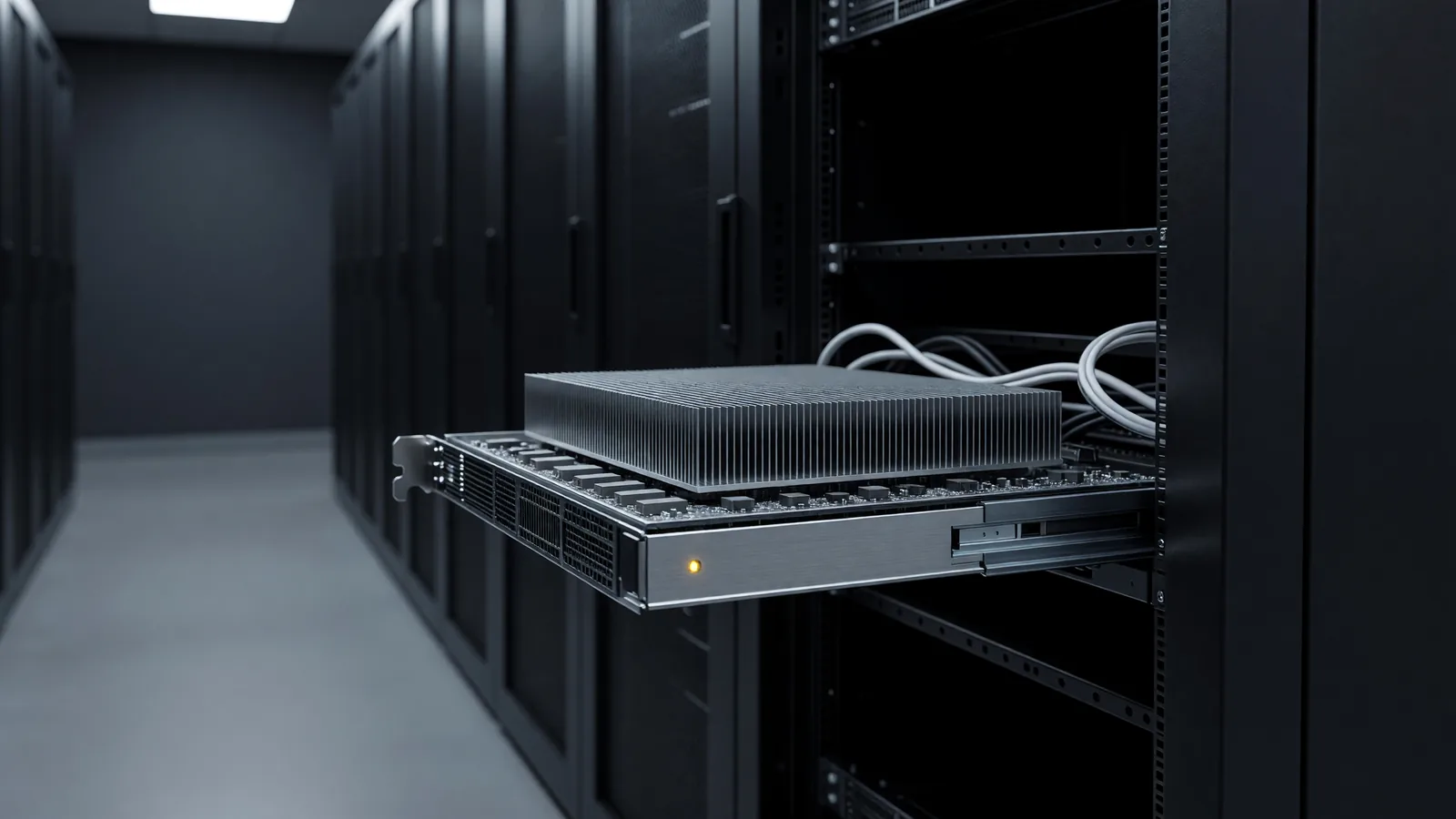
The week of September 8–11, 2026 will be remembered as the week AI privacy stopped being a policy promise and started being a cryptographic proof. NEAR AI Cloud began serving open-weight models inside Intel TDX and NVIDIA GPU enclaves with per-message hardware signatures — the first major provider to make attestation a first-class API feature rather than an enterprise add-on. Meanwhile, Nvidia agreed to buy the open-model ecosystem's default distribution hub, Anthropic reversed its data-retention policy under customer pressure, and the EU AI Act's transparency obligations expanded to cover more enterprise deployments. The thread connecting them: control over AI infrastructure — who holds the keys, who sees the prompts, who owns the weights — became the industry's central negotiation.
Key facts
- NEAR AI Cloud is serving open-weight models (GLM, Qwen, others) inside Intel TDX confidential VMs and NVIDIA H100/H200 TEE enclaves, with TLS terminating inside the enclave and every response signed by a key that never leaves the hardware. The attestation path is public and reproducible in principle; we have not independently run the verifier against a production enclave. (NEAR AI docs) — our full coverage
- Nvidia agreed to acquire Hugging Face for $12,930,300,000 on September 3, with closing expected in H1 2027 pending regulatory approval. Hugging Face hosts more than 3 million models and serves 18 million developers. (NVIDIA Blog) — our full coverage
- Anthropic replaced its controversial data-retention policy with "Enterprise Frontier Safeguards," phasing in this fall. The scope and enforcement mechanisms are Anthropic's own description until the published terms are public. (CNBC) — background: does Anthropic train on your data
- DeepSeek shipped V4.1-Flash — a 552B-parameter MIT-licensed MoE with a 1M-token context and a claimed 890-byte-per-token KV cache — and repriced its API around it. Cached input drops to $0.003 per million tokens off-peak; from September 14,
deepseek-v4-protraffic routes to V4.1-Flash at Flash prices. (model repo, pricing) — the X discourse - The Institute of Foundation Models released K2 Horizon, six Apache 2.0 models from 0.9B to a 375B-parameter MoE with a native 512K context window. Weights are public; training data and code are promised but not yet delivered. (Hugging Face) — our full coverage
- Mistral raised €3 billion at a valuation above €21 billion, framed explicitly around "sovereign, open-weight AI as the technology frontier." (Mistral AI)
- New EU AI Act Article 50 guidance expands what enterprises must disclose about AI-generated content and system interactions. (Law.com)
From "we don't look" to "looking is not available to us"
The most consequential development this week is not a funding round or a benchmark — it is a change in what kind of claim an AI provider can make. NEAR AI Cloud is now serving open-weight models inside hardware trusted execution environments: Intel TDX on the CPU side, NVIDIA's confidential-computing mode on H100 and H200 GPUs. TLS terminates inside the enclave, not at an external load balancer. Each enclave generates a signing key at initialization; the private half never leaves the hardware. Every inference response is signed, and NEAR publishes a verification path so clients can check the chain themselves.
This matters because it moves the privacy guarantee from one category to another. Until now, every hosted-AI privacy claim was a policy statement: "we don't retain your prompts," "we don't train on your data," "we don't look." These are commitments enforced by contracts and, at best, third-party audits. The user has no way to check them. NEAR's TEE architecture replaces that with a different kind of claim: "the hardware prevents us from looking, and here is how you verify the hardware." As our explainer on confidential AI inference and TEEs maps in detail, this is the difference between a promise and a proof.
The honest caveat, and it is not a small one: these are still NEAR's claims about its own system. The attestation path is public and reproducible in principle, but we have not independently run the verifier against a production enclave. The guarantee also stops exactly where NEAR says it stops — proxied third-party models (OpenAI, Anthropic, Gemini) carry no TEE guarantee — and the trust root moves to Intel and NVIDIA's silicon, which is a concentration risk of a different kind. Builders evaluating this for sensitive workloads should read it as "verifiable by design, pending your own verification," not as a settled fact. Our full story on the NEAR launch has the architecture details and the verification walkthrough.
The market context makes this more than a single-provider story. SC Media's 2026 confidential-computing briefing, published the same week, puts hardware-attested TEEs in front of CISOs as a mainstream procurement item rather than a research topic. When security leadership starts asking for attestation in vendor evaluations, the providers who shipped it first set the baseline everyone else has to match.
The consolidation counterweight
The same week NEAR was making infrastructure more verifiable, Nvidia was making distribution more concentrated. The $12.93 billion agreement to acquire Hugging Face — announced September 3, dominating coverage through the week — puts the default open-weight model hub inside the dominant GPU vendor. Hugging Face is not a model lab; it is the distribution and evaluation layer for more than 3 million models and 500,000 datasets, the place where nearly every open-weight release this publication covers lands first.
The neutrality concern is structural, not personal. Nvidia sells the GPUs those models run on, competes with other accelerator vendors the hub must serve equally, and builds its own models that compete with every other publisher on the platform. Jensen Huang's announcement addresses the conflict directly — "NVIDIA compute will not be required to build on or deploy through Hugging Face" — but that promise only needs saying because the incentive to require it now exists. The Register called it one of the most antitrust-worthy AI mergers to date. Commitments made at announcement time are the easy kind; what matters is what the merged entity's terms of service, API rate limits, and promotion algorithms look like in 2028.
For builders, the practical exposure is dependency concentration. If your pipeline pulls weights, datasets, or eval tooling from a single hub, the next 12 months are the window to know your mirrors — model mirrors on other hosts, alternate hubs, and the aggregators we track in our OpenRouter alternatives coverage. This is not a prediction that Hugging Face degrades; it is the standard observation that single points of failure get more expensive to exit the longer you wait. Our full analysis of the deal covers the regulatory landscape and the Microsoft–GitHub precedent.
Policy as a competitive axis
Anthropic's retention reversal, reported by CNBC on September 1 and still reverberating through the week, shows what happens when a policy promise becomes a competitive liability. The company is replacing its controversial data-retention policy with "Enterprise Frontier Safeguards," giving businesses control over how data is reviewed, stored, and managed, phasing in this fall. The scope of the new safeguards is Anthropic's own description until the published terms are public — a pattern this publication flags every time, because provider self-reports are claims, not facts.
What makes the reversal significant is not the policy itself but the reason: customers pushed back hard enough that a frontier lab changed course. Retention terms are now an active competitive axis between frontier providers — the same way price and context length already are. For teams evaluating providers, the zero data retention AI API explainer and the does Anthropic train on your data reference page are the starting points for mapping what each provider actually commits to.
The EU AI Act's Article 50 guidance, published September 10, adds the regulatory dimension. The new guidance broadens what enterprises must disclose about AI-generated content and system interactions, per Law.com's analysis. Compliance teams running open models in production now have a concrete disclosure checklist to map against their inference stack. The intersection of Article 50's transparency obligations with TEE-attested inference is where enterprise procurement will get interesting this quarter: hardware attestation is exactly the kind of technical control that satisfies a regulator's "how do you know?" follow-up.
Open weights: the reproducibility bar rises
Two open-weight releases this week illustrate where the ecosystem's center of gravity is moving. The Institute of Foundation Models released K2 Horizon, six Apache 2.0 models from 0.9B to a 375B-parameter mixture-of-experts with a native 512K context window. The licensing is as open as this class gets, and IFM commits to releasing training data, recipes, training code, and intermediate checkpoints — the last item being the unusual one. Publishing intermediate checkpoints lets outside researchers study how capabilities emerge across training, not just probe a single finished artifact. If IFM delivers, K2 Horizon joins a very short list of frontier-adjacent models that outside teams can genuinely reproduce and audit rather than just download. The dataset repos named in the model card were not yet public at release time, so full reproducibility is promised but not yet delivered. Our full coverage has the size spread, the benchmark caveats, and what to watch for next.
DeepSeek's V4.1-Flash, shipped under MIT on September 10, takes a different path to the same destination: rather than promising future reproducibility, it delivers immediate serving economics. The 552B-parameter MoE with a claimed 890-byte-per-token KV cache and 1M-token context is already live on the API, with cached input at $0.003 per million tokens off-peak. From September 14, all deepseek-v4-pro traffic routes to V4.1-Flash at Flash prices — the first forced migration of paying traffic onto the new architecture. The benchmark claims are DeepSeek's own and unverified; the weights, the license, and the pricing page are checkable facts. The X discourse captured the release-week argument in real time.
Smaller but structurally significant: OpenBMB's MiniCPM5-2B shipped with full training data and recipes under Apache 2.0 — a 2.5B dense model that Artificial Analysis independently scored 15 on Intelligence Index v4.2, best among open models under 4B. Fully reproducible releases at the size class builders actually self-host remain rare enough to be noteworthy. And IBM and NASA open-sourced a lunar foundation model under Apache 2.0, trained on multi-instrument lunar observation data — a template for open scientific models outside the chat-model rat race.
Sovereign AI gets its manifesto
Mistral's €3 billion Series D at a valuation above €21 billion, announced September 8, is the largest single bet yet on the sovereign open-weight thesis. The accompanying manifesto — "sovereign, open-weight AI as the technology frontier" — argues that enterprises and governments want frontier performance without surrendering control of infrastructure and the intelligence loop. The valuation and the sovereignty framing are Mistral's own claims; what would verify the thesis is shipped weights and signed sovereign contracts, not a funding round.
The World Economic Forum picked up the same thread, framing open-weight AI as turning "rented access into owned infrastructure." When a body like the WEF adopts the owned-infrastructure framing, the sovereign-AI argument Mistral is selling moves from vendor pitch to policy vocabulary — relevant to anyone tracking procurement and jurisdiction requirements. The distinction between open-weight and open-source models has never mattered more in these conversations.
Meanwhile, Saudi HUMAIN built a 428B-parameter Arabic model on MiniMax's open M3 stack — a sovereign AI project starting from Chinese open-weight foundations. The pattern is clear: open weights are becoming the substrate on which national AI strategies are built, which makes the neutrality and provenance of the distribution layer (see: Nvidia–Hugging Face, above) a geopolitical question, not just a commercial one.
What to watch next week
Three dates matter. September 14 is DeepSeek's cutover: deepseek-v4-pro API requests start routing to V4.1-Flash at Flash prices — the first forced migration of paying traffic onto the new architecture. The same day is Together AI's serverless deprecation deadline for four models (openai/gpt-oss-20b, google/gemma-4-31B-it, thinkingmachines/Inkling-Small, intfloat/multilingual-e5-large-instruct). If your stack calls any of the four, the migration window closes Monday. And through the week, watch for IFM's K2 Horizon pretrain and midtrain dataset repos — their appearance converts a strong weights release into a reproducible one, which is the first real test of the "fully open" claim.
The longer watch item is the Nvidia–Hugging Face regulatory review. US and EU signals on the review will shape whether the deal closes with neutrality conditions that strengthen the ecosystem's plumbing, or sails through untouched and leaves distribution diversification as unfinished work for every builder who depends on the hub.
DeAI is powered by Morpheus, a decentralized inference marketplace, covered on the same terms as every other provider.
Questions
- What was the biggest AI infrastructure story this week?
- NEAR AI Cloud's TEE-verified private inference — open models served inside Intel TDX and NVIDIA GPU enclaves with per-message signatures — is the week's most consequential story because it moves the privacy claim from a policy promise to a cryptographic attestation users can check. Nvidia's $12.93B agreement to acquire Hugging Face is the largest by market impact.
- What is a TEE and why does it matter for AI inference?
- A trusted execution environment is a hardware-isolated region of a CPU or GPU that keeps data encrypted while in use. For AI inference, it means prompts and model weights stay sealed from the infrastructure operator — verifiable via remote attestation rather than trusted on policy. NEAR AI Cloud, Phala, and others now offer TEE-backed inference.
- Did Nvidia really buy Hugging Face?
- Nvidia announced on September 3, 2026 that it has agreed to acquire Hugging Face for $12.93 billion. The deal has not closed — it is expected to complete in H1 2027, subject to regulatory approval in the US and EU.
- What changed about Anthropic's data policy this week?
- Anthropic replaced its controversial data-retention policy with 'Enterprise Frontier Safeguards,' giving businesses control over how data is reviewed, stored, and managed. The new terms phase in this fall; the scope is Anthropic's description until the published terms are public.
- What is DeepSeek V4.1-Flash?
- DeepSeek V4.1-Flash is a 552B-parameter mixture-of-experts model released under MIT on September 10, 2026, with a 1M-token context window and a claimed 890-byte-per-token KV cache. The API's deepseek-flash model already serves it; from September 14, deepseek-v4-pro traffic routes to it at Flash prices.
Sources
- NEAR AI Cloud — Private Inference — NEAR AI
- NVIDIA to Acquire Hugging Face — NVIDIA Blog
- Anthropic changes data retention policy after pushback from customers — CNBC
- DeepSeek-V4.1-Flash model repo — Hugging Face
- IFM/K2-Horizon-375B-A23B model card — Hugging Face
- Mistral AI news — Mistral AI
- EU AI Act Article 50: New Guidance Expands Enterprise AI Compliance Obligations — Law.com
- IBM and NASA Release Open-Source AI Model to Support Lunar Exploration — IBM Newsroom
- What CISOs need to know about Confidential Computing in 2026 — SC Media
- Open-weight AI turns rented access into owned infrastructure — World Economic Forum
About DeAI
DeAI is an independent publication covering open-weight AI models, private inference, and decentralized infrastructure — the tools for running AI you actually control. We test providers on price, privacy, and refusal behavior and publish the numbers, not the vibes. DeAI is powered by Morpheus (mor.org), a decentralized inference marketplace, and covers it on the same terms as every other provider.
Powered by Morpheus and StrandCMS
Morpheus is a decentralized inference marketplace, covered on the same terms as every other provider — we rank it wherever the data lands. StrandCMS is the open-source, agent-first framework this site is built on.