Tencent has published the full Hy4 flagship weights — 770B total, 49B active per token, natively multimodal, 1M-token context — plus FP8 and base variants and a system card, fulfilling the November 4 promise. The part builders should read first is the license, not the benchmarks.
Key facts
- 770B total parameters, 49B active per token (plus 1.23B ViT and a 3.3B DFly2 drafter), 78 layers, 1M-token context, per the model card
- Weights published for Hy4, Hy4-FP8, and pre-trained Hy4 base on Hugging Face, ModelScope, and GitCode; an 82-page system card is linked at hy.tencent.ai
- Tencent Hy License v1.0: Apache-derived, but Section 10 requires a separate written license for MaaS use above US$50M gross revenue per 12 months or 100M monthly active users
- Self-reported benchmark claims: MMLU 91.6, SimpleQA 57.2, and first place among open-weight models on a 579-task financial evaluation — none independently verified
- Official announcement drew 1.3K+ likes and 76K+ views within hours per the Grok sweep; FP8 size is ~924GB by community figures (unverified, conflicting ~786GB figure in circulation)
What's driving the conversation
The @TencentHunyuan announcement post and a follow-up with benchmarks drove most of the volume, with @MiaAI_lab, @ashxhart, and @2xnmore amplifying within hours. The discussion splits three ways: excitement about a fully open multimodal flagship at DeepSeek-adjacent scale, benchmark skepticism (every number is Tencent's own), and a quieter but more consequential thread about the license — several accounts flagged that the August preview shipped under Apache 2.0 while this release does not. Some replies conflate this release with Hy4 flash; they are different models, published two days apart.
The substance
The model card confirms the architecture: a 770B-parameter MoE backbone with 49B active per token (plus 1.23B for vision and a 3.3B DFly2 speculative-decoding drafter), 78 layers with 256 routed experts per MoE layer and top-8 activation, Gated DeepSeek Sparse Attention with IndexCache, and a 1,048,576-token context window. The release includes the instruction-tuned model, an FP8 quantized build, and the pre-trained base model, with day-zero vLLM and SGLang recipes and a GGUF build marked "for end-to-end testing purposes" rather than production use.
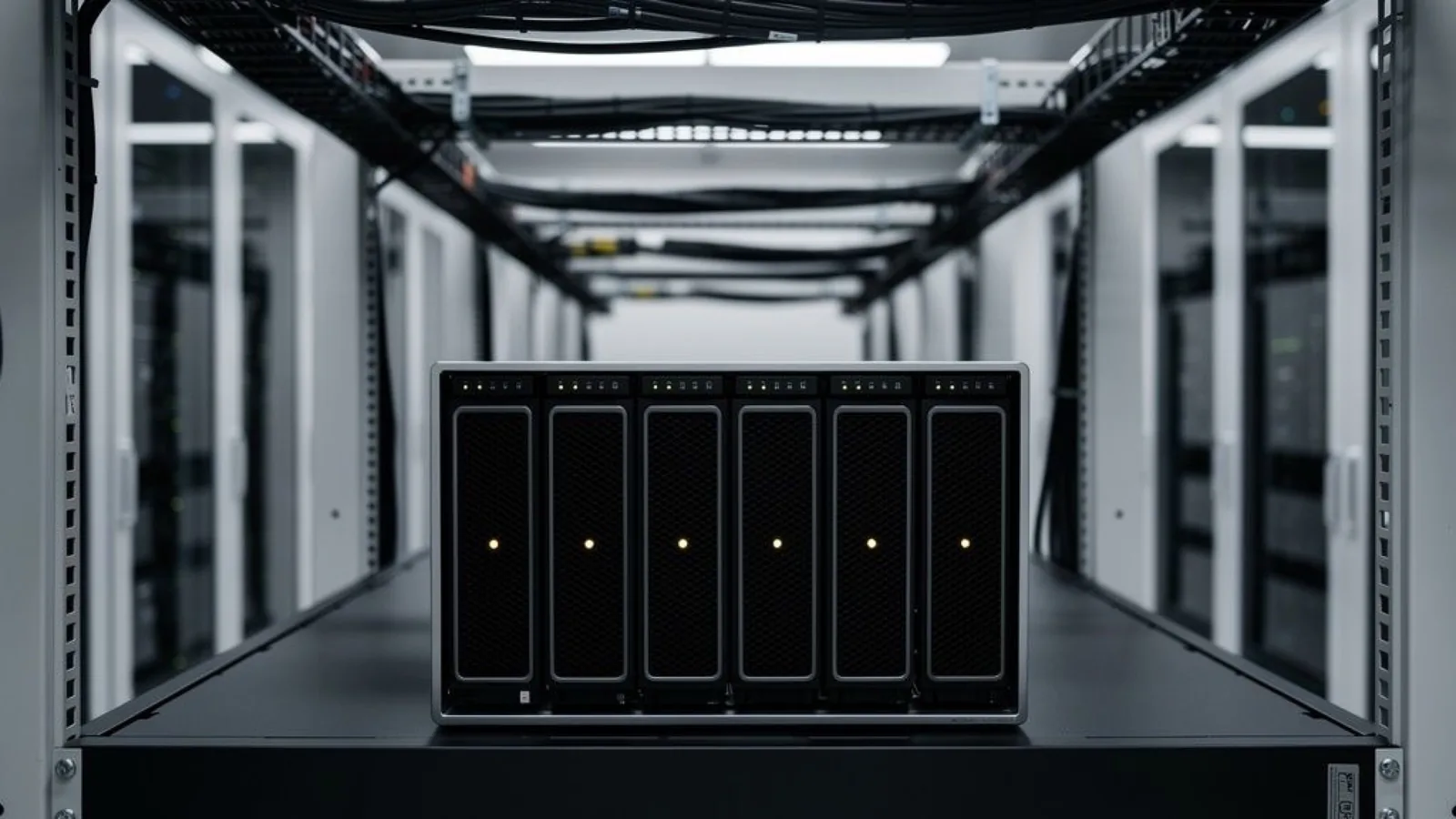
The hardware reality is the constraint the celebration glosses over. Community estimates put the FP8 weights around 924GB — treat that as unverified; a conflicting ~786GB figure is also circulating — and Tencent's own vLLM recipe uses a --tensor-parallel-size 8 flagship-GPU configuration. This is a model you rent or colocate, not one you run at a desk. Note the family boundaries: this is the full Hy4 flagship, not Hy4 flash (224B-A12B, published November 19) and not the Apache 2.0-licensed Hy4 preview from August 28 — three distinct stories that keep getting merged in the discourse.
The license deserves more attention than it got on X. We read the Tencent Hy License v1.0 directly: it is derived from Apache 2.0 but Section 10 requires a separate written license from Tencent if you operate a MaaS business with aggregate worldwide gross revenue above US$50M in any consecutive 12-month period (regardless of whether revenue comes from the model), or deploy it in a product with more than 100 million monthly active users. Internal use is exempt. That is a materially different proposition from the preview's Apache 2.0, and it applies to derivative works — fine-tunes, quantizations, distillations all carry Section 10 forward.
Every capability claim is a self-report. The card's headline numbers (MMLU 91.6, SimpleQA 57.2, first among open-weight models on its 579-task financial evaluation, hallucination rate "cut from 15.76% to 5.45%") come from Tencent's own evaluation suite, and the card even discloses that its base model can fail to follow the expected answer format in few-shot evaluations, distorting scores. The 82-page system card is linked but its safety/testing content has not been independently analyzed in the coverage we reviewed.
Why builders are watching
Three things decide whether Hy4 matters to you: whether your provider will serve it (the license's Section 10 gives large providers a reason to negotiate rather than ship), whether you can host it (datacenter-class only), and whether the benchmark claims survive independent evaluation. The third is the one to wait on. This is the third act of a heavily reported arc — the November 4 announcement was covered by Reuters, and Hy4 flash landed two days ago — so the open-weight shelf now spans from a 224B-A12B flash model to a 770B-A49B flagship under one family. For the license question specifically, this is the strongest recent data point in the open-weight-versus-open-source distinction: public weights with restrictive commercial terms are the pattern to watch, and DeepSeek's December raise showed the capital is there to keep this tier competitive.
Questions
- What did Tencent release on November 20, 2026?
- Full open weights for Hy4, its 770B-total/49B-active natively multimodal mixture-of-experts flagship with 1M-token context, on Hugging Face, ModelScope, and GitCode — alongside Hy4-FP8, the pre-trained Hy4 base model, an 82-page system card, and a GGUF build. The announcement post drew 1.3K+ likes and 76K+ views within hours.
- Can you run Tencent Hy4 yourself?
- Not on a laptop. The FP8 checkpoint is roughly 924GB by community figures (unverified; one widely shared ~786GB figure conflicts). Tencent's own vLLM and SGLang recipes target tensor-parallel 8x-class flagship GPU servers, so self-hosting Hy4 is a datacenter-scale undertaking.
- What is disputed about the Hy4 release?
- Mostly size and benchmark claims. Community estimates of the FP8 download size conflict (~924GB vs ~786GB), and every benchmark number on the model card — MMLU 91.6, SimpleQA 57.2 — is Tencent's own self-report, not independently verified.
- How is the Tencent Hy License different from Apache 2.0?
- It is Apache-derived but Section 10 adds MaaS commercial terms: a separate written license is required if a MaaS operator's aggregate gross revenue exceeds US$50M in any 12-month period, or if a product using the weights exceeds 100M monthly active users. Internal use is exempt.
Sources
- Tencent Hy4 model card (weights, license, deployment recipes) — Hugging Face
- Tencent Hy License v1.0 (LICENSE file, tencent/Hy4) — Hugging Face
- Hy4 System Card (PDF) — Tencent
- @TencentHunyuan announcement post — X
About DeAI
DeAI is an independent publication covering open-weight AI models, private inference, and decentralized infrastructure — the tools for running AI you actually control. We test providers on price, privacy, and refusal behavior and publish the numbers, not the vibes. DeAI is powered by Morpheus (mor.org), a decentralized inference marketplace, and covers it on the same terms as every other provider.
Powered by Morpheus and StrandCMS
Morpheus is a decentralized inference marketplace, covered on the same terms as every other provider — we rank it wherever the data lands. StrandCMS is the open-source, agent-first framework this site is built on.